
 Make us preferred on Google
As solar energy adoption continues to grow worldwide, many homeowners and businesses are looking for efficient ways to manage their power systems. One of the most important components of any solar setup is the inverter. Among the various types available today, hybrid inverters have become increasingly popular due to their flexibility and advanced features.
In this article, we will explore what a hybrid inverter is, how it differs from traditional inverters, and why it may be the best choice for your energy needs.
What Is a Hybrid Inverter?
A hybrid inverter is an advanced power conversion device that combines the functions of a solar inverter and a battery inverter into a single unit. It can manage electricity from solar panels, batteries, and the utility grid simultaneously.
Unlike traditional inverters, hybrid inverters intelligently decide where energy should come from and where excess energy should be stored, ensuring maximum efficiency and reliability.
What Is a Traditional Inverter?
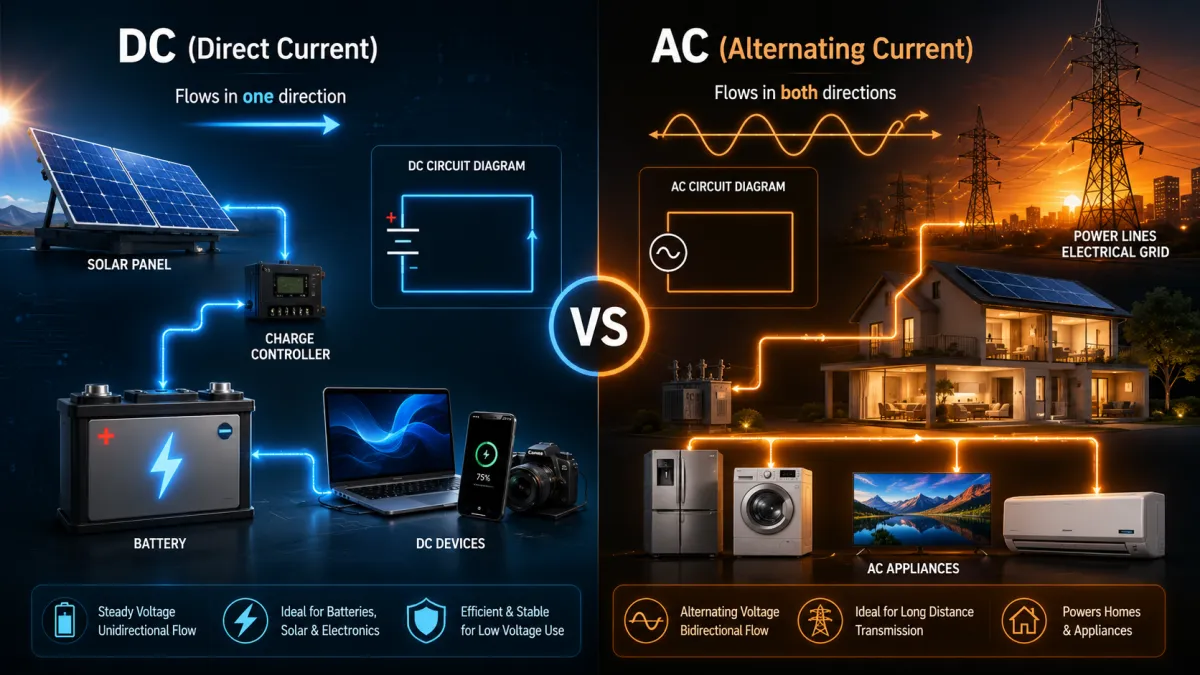
A traditional inverter converts direct current (DC) electricity into alternating current (AC) electricity for use in homes and businesses. Depending on the type, it may work with solar panels or batteries, but it typically lacks the intelligent energy management features found in hybrid systems.
Key Differences Between Hybrid and Traditional Inverters
| Feature | Hybrid Inverter | Traditional Inverter |
|---|---|---|
| Battery Support | Built-in battery management | Requires additional equipment |
| Energy Storage | Stores excess solar energy | Limited or no storage support |
| Backup Power | Provides backup during outages | Usually unavailable |
| Energy Management | Smart automatic switching | Basic power conversion |
| Cost | Higher initial investment | Lower upfront cost |
| Efficiency | Optimized energy usage | Standard operation |
Advantages of Hybrid Inverters
- Better energy independence.
- Lower electricity bills.
- Battery storage compatibility.
- Reliable backup power.
- Smart monitoring and mobile app support.
- Maximum solar energy utilization.
- Future-ready solar solution.
Disadvantages of Hybrid Inverters
- Higher purchase price.
- More advanced setup requirements.
- Battery systems increase overall project cost.
Who Should Choose a Hybrid Inverter?
- Homeowners seeking energy independence.
- Areas with frequent power outages.
- Businesses requiring uninterrupted power.
- Users planning to install battery storage.
- People looking to maximize solar energy savings.
Conclusion
Hybrid inverters represent the next generation of solar power technology. While traditional inverters are still suitable for basic solar installations, hybrid inverters offer greater flexibility, energy efficiency, and backup power capabilities.
If you want a solar system that can intelligently manage solar panels, batteries, and grid power while reducing energy costs and improving reliability, a hybrid inverter is often the best long-term investment.
As battery technology continues to improve and energy costs rise, hybrid inverters are becoming the preferred choice for modern solar installations worldwide.