
 Make us preferred on Google
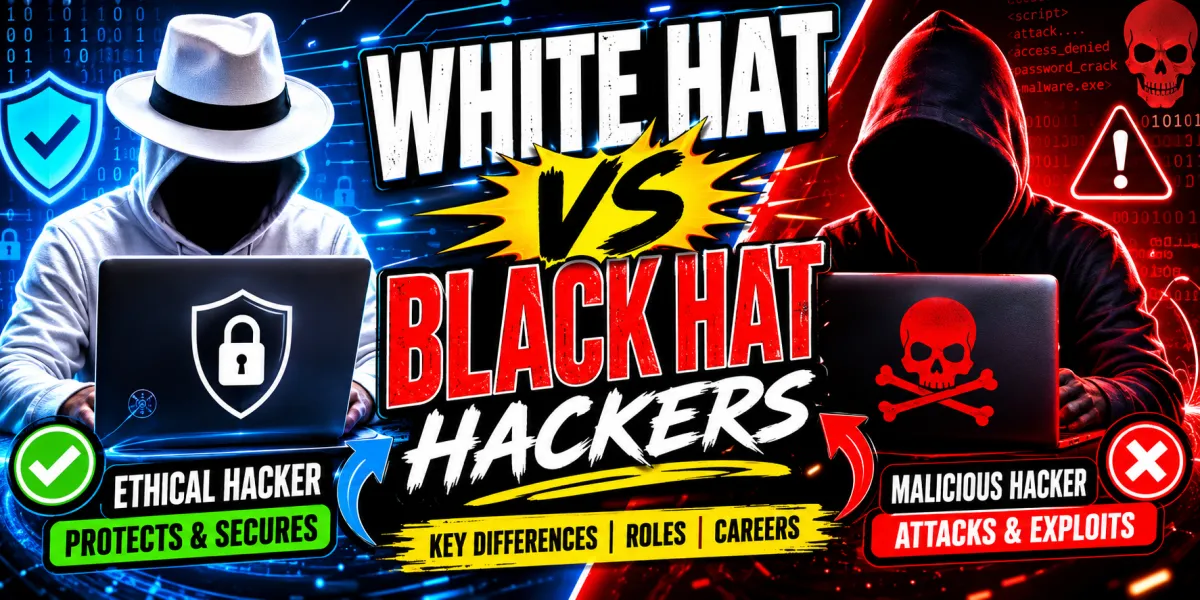
Cybersecurity has become one of the fastest-growing industries in the digital world. Every day, businesses, governments, and individuals face cyber threats that can result in financial loss, stolen personal information, or damaged reputations. Behind these cyber incidents are different types of hackers, each with unique intentions and methods. Among the most commonly discussed are White Hat hackers and Black Hat hackers.
Although both groups possess advanced technical skills, their goals, ethics, and legal standing are completely different. Understanding these differences is essential for anyone interested in cybersecurity, ethical hacking, or protecting digital assets.
Who Is a White Hat Hacker?
A White Hat hacker, also known as an ethical hacker, is a cybersecurity professional who uses hacking techniques legally and with permission to identify vulnerabilities before cybercriminals can exploit them. Their primary objective is to improve security rather than cause harm.
Organizations hire White Hat hackers to perform penetration testing, vulnerability assessments, security audits, and risk analysis. By simulating real-world cyber attacks, they help companies strengthen their systems against future threats.
Main Responsibilities of White Hat Hackers
- Perform penetration testing.
- Identify software vulnerabilities.
- Conduct network security assessments.
- Report discovered security flaws.
- Recommend security improvements.
- Assist organizations in complying with cybersecurity standards.
- Support incident response teams.
Who Is a Black Hat Hacker?
A Black Hat hacker is an individual who illegally accesses computer systems for personal gain or malicious purposes. Their activities violate laws and ethical standards. Black Hat hackers exploit vulnerabilities to steal data, spread malware, demand ransom, or disrupt business operations.
Unlike ethical hackers, Black Hat hackers never receive authorization before attempting to compromise systems.
Common Activities of Black Hat Hackers
- Stealing financial information.
- Identity theft.
- Deploying ransomware.
- Creating computer viruses.
- Selling stolen data.
- Performing phishing attacks.
- Launching Distributed Denial-of-Service (DDoS) attacks.
Key Differences Between White Hat and Black Hat Hackers
| White Hat Hacker | Black Hat Hacker |
|---|---|
| Works legally with permission. | Operates illegally without permission. |
| Protects systems. | Attacks systems. |
| Reports vulnerabilities. | Exploits vulnerabilities. |
| Earns legal income. | Earns money through cybercrime. |
| Improves cybersecurity. | Weakens cybersecurity. |
| Works for organizations. | Targets organizations. |
Skills Shared by Both Types of Hackers
Interestingly, White Hat and Black Hat hackers often possess similar technical skills. The biggest difference lies in how those skills are used.
- Programming languages such as Python, JavaScript, and C++.
- Linux operating systems.
- Networking fundamentals.
- Web application security.
- Cryptography basics.
- Operating system internals.
- Cloud security.
- Reverse engineering.
Popular Tools Used by Ethical Hackers
- Nmap
- Wireshark
- Burp Suite
- Metasploit Framework
- John the Ripper
- Aircrack-ng
- OWASP ZAP
- Nikto
These tools are legal when used with proper authorization for security testing and educational purposes.
Common Techniques Used by Black Hat Hackers
- Phishing campaigns.
- Password cracking.
- Social engineering.
- Malware development.
- SQL Injection.
- Cross-Site Scripting (XSS).
- Remote code execution.
- Botnet attacks.
Why Ethical Hackers Are Important
Modern organizations depend heavily on digital infrastructure. Ethical hackers help prevent expensive cyber incidents by discovering weaknesses before criminals do. Their work reduces financial losses, protects customer data, ensures regulatory compliance, and strengthens trust between companies and their users.
Many businesses also operate Bug Bounty programs, rewarding ethical hackers who responsibly disclose security vulnerabilities.
Can a Black Hat Hacker Become a White Hat Hacker?
Yes. Some individuals who previously engaged in unauthorized hacking later choose legal cybersecurity careers after gaining proper education, certifications, and a commitment to ethical practices. However, past criminal actions may still have legal and professional consequences.
Career Opportunities for White Hat Hackers
- Ethical Hacker
- Penetration Tester
- Security Consultant
- Cybersecurity Analyst
- Incident Response Specialist
- Cloud Security Engineer
- Security Engineer
- Application Security Engineer
- Digital Forensics Analyst
Recommended Certifications
- Certified Ethical Hacker (CEH)
- CompTIA Security+
- CompTIA PenTest+
- Offensive Security Certified Professional (OSCP)
- GIAC Penetration Tester (GPEN)
- CISSP
How to Start Learning Ethical Hacking
- Learn networking fundamentals.
- Study Linux.
- Understand programming basics.
- Practice in legal labs.
- Learn web application security.
- Participate in Capture The Flag (CTF) competitions.
- Build a home cybersecurity lab.
- Earn industry-recognized certifications.
Legal and Ethical Considerations
Always obtain written permission before testing any network or application. Unauthorized access to computer systems is illegal in most countries and can result in criminal charges, fines, or imprisonment. Ethical hacking is effective only when performed responsibly, transparently, and within the scope of authorized agreements.
Conclusion
White Hat and Black Hat hackers may possess similar technical abilities, but their intentions set them apart. White Hat hackers protect organizations, strengthen cybersecurity, and help create a safer internet. Black Hat hackers exploit weaknesses for illegal gain, causing financial damage and compromising sensitive information.
If you are interested in cybersecurity, choosing the ethical path offers rewarding career opportunities, competitive salaries, and the chance to make a positive impact. By continuously learning, practicing responsibly, and respecting legal boundaries, you can become a trusted cybersecurity professional in today's rapidly evolving digital landscape.